



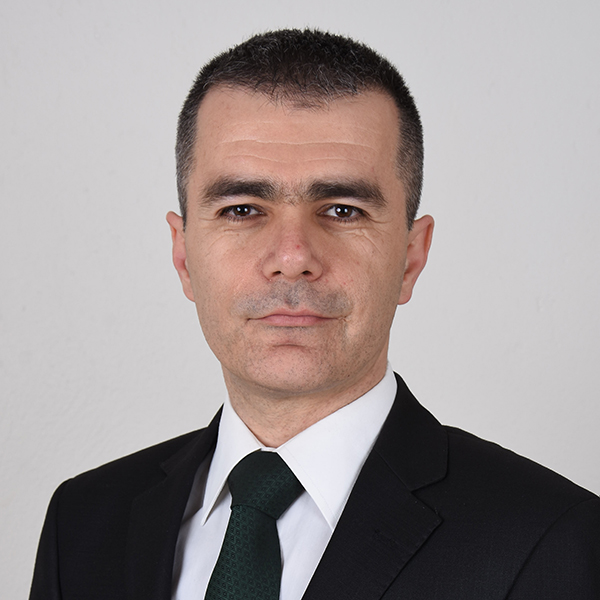
UTKU KÖKER
Cost and Environmental Impact Optimization in a Virtual Energy System: The Role of Storage Units
Abstract
In the context of the global energy transition, balancing cost minimization with environmental sustainability in meeting energy demand is of critical importance. This study focuses on the cost-optimal energy supply for a hypothetical settlement with a predefined long-term energy demand profile, utilizing various energy production technologies. The primary objective is to simultaneously analyze economic outcomes and environmental impacts while meeting dynamic energy requirements.
The methodological framework of the research centers on OSeMOSYS (Open Source Energy Modelling System), a transparent and accessible energy system modeling tool. Through the optimization process conducted via OSeMOSYS, the study identifies the most economical pathway to satisfy energy demand. Furthermore, the model quantifies the total system costs and the resulting environmental degradation, providing a comprehensive assessment of the planning outcomes.
A defining feature of this study, which distinguishes it from many existing open-source modeling applications, is the explicit integration of energy storage technologies into the optimization portfolio. While many contemporary models neglect storage units or exclude them from the technology mix to reduce computational complexity, this research treats storage as a fundamental component for enhancing system flexibility and reliability. Consequently, this study stands among a limited number of applications that incorporate storage units within an open-source framework.
The model, developed for a virtual region, demonstrates the system’s response to fluctuating demand over years and details the impact of storage units on overall system costs. The findings highlight the potential of open-source software and energy storage solutions in supporting decision-making processes for sustainable energy planning.
Biography
Utku Köker –was born in 1978 in Sinop, Turkey. He completed his undergraduate education in 2000 and his master’s degree in 2003 at 9 Eylül University, Department of Industrial Engineering.He graduated from Anadolu University International Relations undergraduate program in 2015 and from Süleyman Demirel University, Institute of Natural and Applied Sciences, Department of Industrial Engineering doctorate program in 2022.
Since 2010, he has been working as an industrial engineer at Uşak Provincial Disaster and Emergency Directorate and continues to work on energy optimization and modeling with OSEMOSYS, TEMOA and Answer-TIMES programs.