



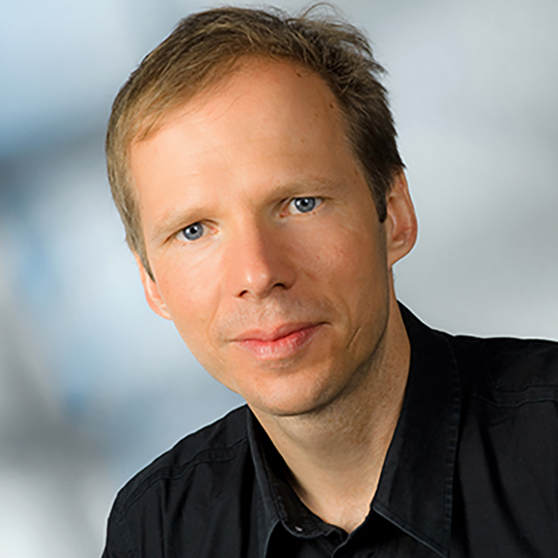
GUSTAV RESCH
A comprehensive assessment of realisable renewable energy potentials in Austria by 2030 and 2040
Biyografi
The study “Renewable Energy Potentials in Austria for 2030 and 2040” provides a comprehensive, methodologically consistent, and spatially highly resolved assessment of renewable energy potentials across Austria. It evaluates the technical and realisable potentials of all major renewable energy technologies and analyses their possible contributions to the energy system in the target years 2030 and 2040.
A key objective of the study is to ensure comparability across technologies by applying a harmonised methodological framework. The analysis is carried out with high spatial resolution and differentiates between technical and realisable potentials, taking into account environmental constraints, land-use aspects, and socio-economic framework conditions. The results are presented as ranges (Low, Medium, High), reflecting uncertainties and varying development conditions.
The findings show that Austria has substantial renewable energy potentials that could enable a largely climate-neutral energy system by 2040. Photovoltaics and wind energy provide the largest additional potentials in the electricity sector, while hydropower remains a central pillar. In the heat sector, ambient heat and shallow geothermal energy offer particularly significant contributions, complemented by waste heat, solar thermal energy, and deep geothermal resources. Bioenergy continues to play an important role, although its expansion potential is limited, with increasing relevance in specific applications such as process heat and renewable gases.
Overall, the study highlights that the realisation of these potentials depends less on technical feasibility than on political, economic, and societal framework conditions. By providing a transparent and consistent data basis, the study supports informed decision-making in energy policy, spatial planning, and infrastructure development.
Please note that results are made accessible through an interactive web-based GIS platform that enables detailed spatial exploration of renewable energy potentials down to the municipal level: https://gtif-austria.info/.
Further information on the project, including methodology and results, is available via the AIT Austrian Institute of Technology project page: https://www.ait.ac.at/en/themen/energieszenarien-und-energiesystemplanung/projects/renewable-energy-potentials-in-austria-for-2030-and-2040
Biography
In January 2023 Gustav joined the AIT Austrian Institute of Technology, Center for Energy, and is acting as Senior Scientist and Thematic Coordinator for Energy Scenarios and System Planning at the Competence Unit ‘Integrated Energy Systems’.
Thanks to more than two decades research practice at TU Wien, Energy Economics Group, in addition to teaching activities Gustav has broad experience in energy policy assessments and energy modelling – with focus on renewable energy technologies, be it from an economic, policy or modelling viewpoint. His fields of activity include techno-economic assessments of (renewable) energy technologies, design and evaluation of energy policy strategies. Within those activities energy modelling (focusing on electricity markets, policy interactions, market integration and technology dynamics) typically forms an essential and integral part. Gustav has been coordinating and/or contributed to several European and national studies and policy assessments related to renewable energies and decarbonization, assessing the feasibility and impacts of policy targets and measures for 2020, 2030 and beyond.