



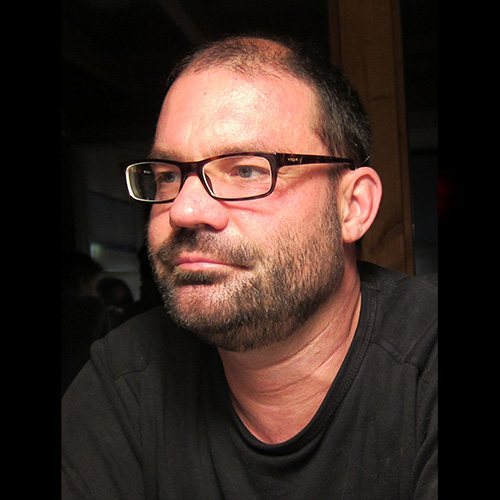
EBERHARD WAFFENSCHMIDT
TH Köln – University of Applied Sciences, Cologne, Germany
Energy Agents for a Decentralized Distribution Grid Management
Abstract
The growing numbers of electrical loads and decentral generators will put a high burden to the distribution power grids. The required instantaneous power may in the near future often exceed the requirements for grid assets, if too many loads are by chance operated simultaneously. A grid management system may avoid this.
The recently reformed German energy industry act (§14a) allows grid operators to implement incentives to avoid grid overloading before hard switching is applied. Here, we propose a decentralized local grid management based on a local marked. It consists of energy agents associated to each dispatchable load. They can communicate to each other in the local power grid, e.g. by powerline communication or broadcast methods.
They share bids for dispatchable power. One them acts as master and calculates a merit order from the bids. This results in in a local re-dispatch, which is communicated back to the agents.
In an extension, the agents share physical measurements at their grid connection point. Using the set of all measurements the master performs a grid state estimation to obtain the actual power limit. This way additional non-monitored loads are considered, which contribute to the grid load.
The approach is simulated exemplarily for a planned energy neutral community consisting of 36 family houses in Bergneustadt, Northrhine-Westfalia. Each house is equipped with an electric vehicle, a heat pump and a roof top photovoltaic (PV)-system.
The agents bid by offering a price for an amount of dispatchable power. If global time varying energy tariffs are applicable, each agent first calculates a price optimized dispatch plan for its component. Any deviation of it would increase cost and this increased cost is used as the first component of the bid. In addition, a second bid component is calculated from the urgency of the energy need. As an example, the closer the desired time for the charging to complete is, the higher the bid is. Simulations with different time dependencies are performed and compared.
Biography
Eberhard Waffenschmidt (Prof. Dr. Ing.) received the degree in electronic engineering and the Ph.D. degree with RWTH Technical University, Aachen, Germany. From 1995 to 2011, he was employed at Philips Research, Aachen, Germany, finally as senior scientist. Since 2011, he is Professor of Electrical Power Grids at TH Köln – University of Applied Sciences, Cologne, Germany. There, he participates the Cologne-Institute for Renewable Energy (CIRE). He is IEEE-member since 2005, meanwhile Senior Member. He is currently Chairman of the Solarenergie-Förderverein Deutschland e.V. (SFV, Society to Promote Solar Energy Germany), Aachen, Germany. His current research interests include identifying and removing obstacles on the way to a 100% use of renewable energy.